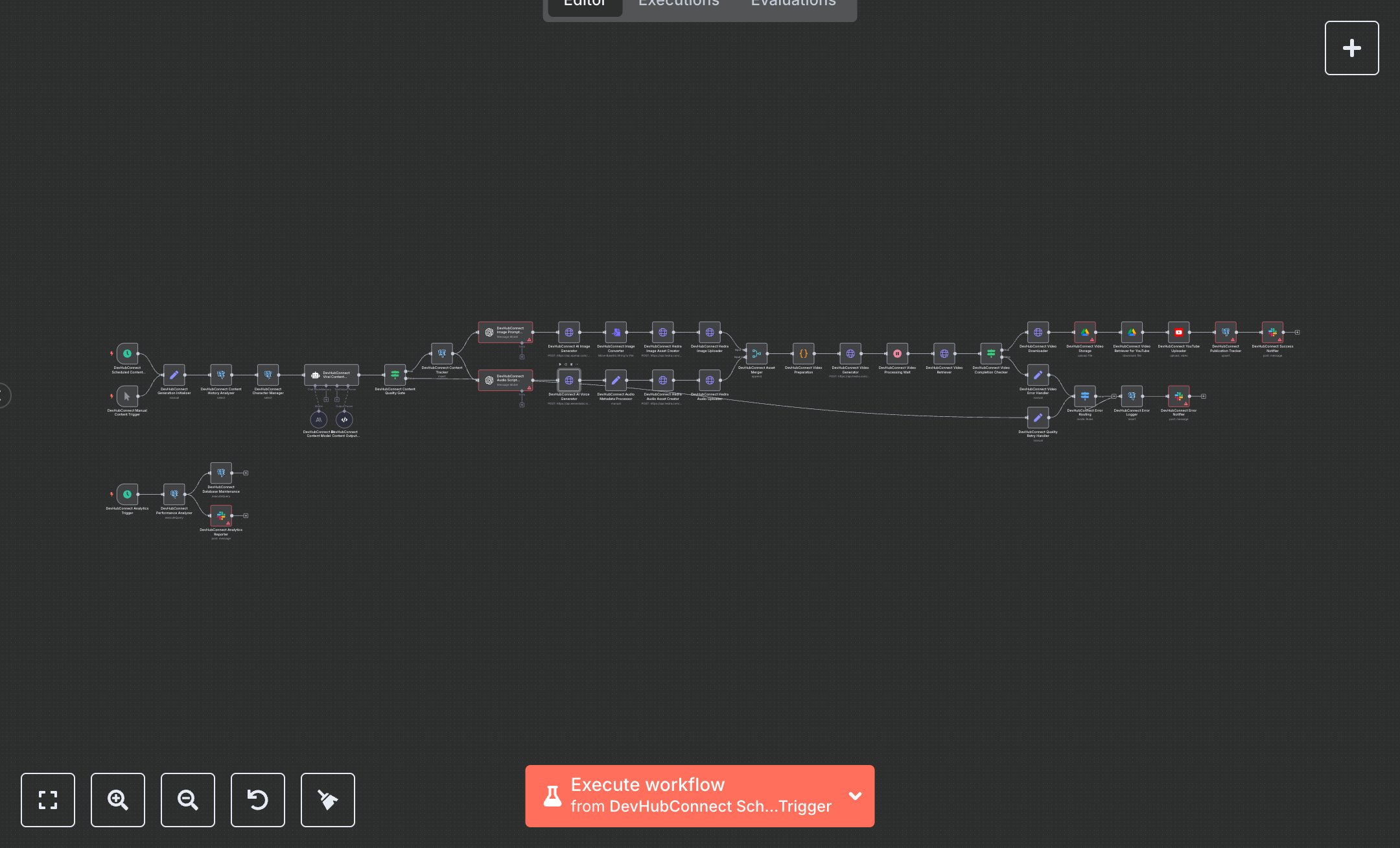
LLM Baby Podcast Videos for YouTube with AI Topic Generation and Hedra Video Upload
This workflow automates viral AI baby podcast video creation for YouTube Shorts, using Schedule Trigger (content generation timing), Manual Trigger (on-demand creation), Postgres (content tracking), OpenAI (topic and script generation), HTTP Request (image/audio generation via OpenAI and ElevenLabs, video via Hedra), Google Drive (video storage), YouTube (video upload), and Slack (notifications). It ensures brand-safe, engaging content with analytics. Install n8n from n8n.io for self-hosting or sign up at cloud.n8n.io. Obtain API keys from openai.com (OpenAI node, 'gpt-4o'), elevenlabs.io (HTTP Request for audio), hedra.com (HTTP Request for video), console.developers.google.com (Google Drive, YouTube OAuth2), and slack.com (Slack webhook). Set up a Postgres database with 'content_generation_history' and 'character_personas' tables using your provider’s credentials. Configure Schedule Trigger for 9 AM, 3 PM, 9 PM UTC. Set HTTP Request nodes with respective API URLs and authentication headers. Ensure Google Drive node uses a designated folder ID and YouTube node has proper privacy settings. Test by running Manual Trigger to generate a video. Verify topic output in OpenAI node, image/audio in HTTP Request nodes, and video upload in YouTube node. Check Postgres logs ('Content Tracker') and Slack alerts. Invalid topics (e.g., low viral potential) trigger Condition node errors, retrying generation. Missing API keys cause HTTP Request nodes to fail, logged in Postgres ('Error Logger') with Slack notifications. Deploy by activating the workflow and setting credentials. Monitor Slack for publication alerts and weekly analytics. If video generation fails, HTTP Request nodes timeout after 60-120 seconds, logging errors for debugging.
$6.99
Workflow steps: 41
Integrated apps: scheduleTrigger, manualTrigger, set